


Many manufacturing enterprises engaged in automotive parts, electronic housings, and mechanical structural components have been chasing stable dimensional accuracy, long service life, and low defective rates for die casting parts, yet most of them fail to notice underlying quality risks that quietly increase overall production costs. Irregular wall thickness, uneven internal density, easy deformation after processing, and poor surface finish are not simple appearance defects. These hidden problems will directly lead to assembly mismatches, shortened component durability, frequent after-sales failures, and unexpected downtime in mass production lines. Choosing reliable aluminum alloy die casting products can fundamentally avoid these chronic industrial troubles and optimize the entire processing and application chain from raw material forming to finished product delivery.
Most buyers only focus on unit quotation and delivery cycle when selecting die casting accessories, ignoring material compactness, mold matching precision, and post-processing standardization. Low-cost ordinary die castings often look qualified on surface inspection, but contain microscopic pores, shrinkage cavities and internal stress concentration. During high-temperature operation, vibration environments or long-term load bearing, these invisible defects will rapidly expand, causing cracking, air leakage, oil leakage and structural damage. Professional customized die casting solutions from Shenzhen Hongxin Technology strictly control every metallurgical and molding link, eliminating internal hidden dangers that conventional finished product inspections cannot detect.
Dimensional tolerance deviation remains one of the most frequent troublesome issues in batch aluminum die casting production. Slight size errors in single parts will accumulate layer by layer during assembly, resulting in tight fitting, loose clearance, unable to install normally, or abnormal wear during operation. Mass rework, scrap replacement and secondary processing greatly consume labor hours and logistics expenses, greatly squeezing enterprise profit margins. Precision die casting adopts integrated high-pressure molding technology, controlling dimensional tolerance within ultra-small standard ranges, ensuring consistent specifications across thousands of identical parts and fully meeting automated assembly line matching requirements.
Corrosion resistance and aging resistance are deep performance requirements easily overlooked by downstream users. Aluminum die castings used in outdoor equipment, new energy vehicles, communication base stations and power accessories face humidity, dust, temperature changes and chemical erosion for a long time. Ordinary die castings suffer oxidation, discoloration, corrosion and strength attenuation quickly, reducing equipment operation stability and shortening overall service cycle. Premium aluminum alloy materials combined with professional surface treatment processes significantly improve weather resistance, salt spray resistance and wear resistance, adapting to harsh working environments all year round.
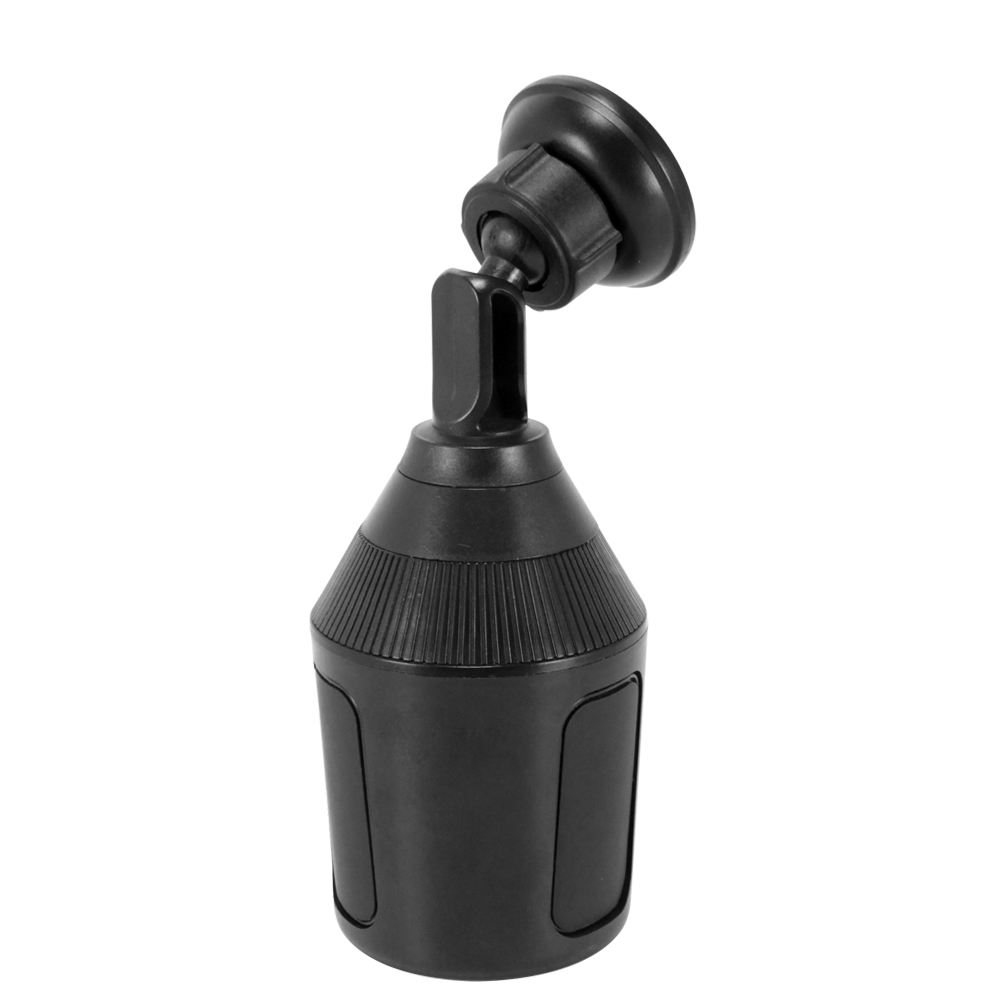
Complex structural customization capability directly determines whether die casting parts can match personalized equipment design. More and more intelligent equipment, lightweight mechanical structures and precision instrument shells require thin-wall, special-shaped, multi-cavity and embedded structural die castings. Traditional casting processes cannot achieve fine structure molding, leading to split assembly, weak overall strength and low structural stability. Integrated one-time die casting molding realizes complex shape forming without secondary splicing, greatly enhancing overall structural rigidity while reducing assembly procedures and production error sources.
Core Performance Comparison Of Ordinary Die Castings & High-Precision Aluminum Alloy Die Castings
| Performance Index | Ordinary Low-Quality Die Castings | Premium Precision Aluminum Die Castings | Practical Application Impact |
|---|---|---|---|
| Internal Structure Density | High porosity, obvious shrinkage defects | Compact structure, no hidden air holes | Affects pressure resistance, air tightness and service life |
| Dimensional Tolerance Range | Large deviation, unstable batch size | Ultra-precise uniform tolerance | Determines assembly matching efficiency and qualification rate |
| Surface Smoothness | Rough surface, burrs and scratches | Smooth flat surface, no obvious burr | Reduces polishing procedures and subsequent processing costs |
| High Temperature Resistance | Poor stability, easy deformation at high temperature | Stable mechanical properties, low thermal deformation | Suitable for engine parts, new energy thermal management components |
| Load Bearing Durability | Easy fatigue cracking, short service cycle | High tensile strength, long fatigue resistance | Reduces equipment failure frequency and maintenance cost |
| Surface Corrosion Resistance | Fast oxidation and rusting | Strong anti-corrosion and weather resistance | Adapts to outdoor, humid and special industrial environments |
The air tightness and pressure resistance performance of aluminum alloy die castings directly affect safety performance of hydraulic parts, pipeline accessories, automotive chassis parts and new energy cooling components. Unqualified internal density will cause medium leakage, pressure instability and safety hazards. Strict vacuum die casting processes and professional air tightness testing procedures ensure each finished part passes leakage detection, meeting strict pressure-bearing safety standards in automotive, new energy and industrial machinery fields.
Lightweight characteristic of aluminum alloy die castings conforms to the global trend of energy saving and consumption reduction in manufacturing industry. Replacing iron and steel structural parts with high-strength aluminum die castings can effectively reduce overall equipment weight, lower energy consumption, improve operation flexibility, and maintain excellent structural strength at the same time. It perfectly matches lightweight upgrading demands of new energy vehicles, intelligent robots, portable mechanical equipment and aerospace auxiliary components.
Whole-process quality control runs through material melting, mold opening, high-pressure injection, cooling molding, deburring, CNC precision machining, surface anodizing, painting treatment and finished product inspection. Each batch of products has complete size detection, hardness testing and appearance verification reports, avoiding unqualified mixed delivery. Stable supply capacity also supports large-batch long-term orders, emergency replenishment production and customized non-standard part development, matching diversified production plans of different scale enterprises.
In long-term industrial cooperation, matching after-sales technical service is also an indispensable hidden value. Many die casting suppliers only provide finished products without technical guidance, causing buyers to encounter installation adaptation problems, processing parameter mismatches and use failure problems that cannot be solved in time. Comprehensive technical support including drawing optimization, process matching, on-site installation guidance and fault analysis helps users avoid unnecessary losses, realize efficient application of die casting parts, and maintain stable and orderly operation of the entire production chain.